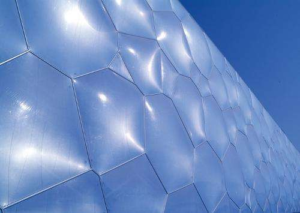
In the experimental field of Wageningen University in the Netherlands, a greenhouse that can open and close like a drawer is rewriting the rules of crop research – its movable ETFE roof system can switch from fully enclosed to fully open within 30 seconds, providing researchers with unprecedented environmental control precision.
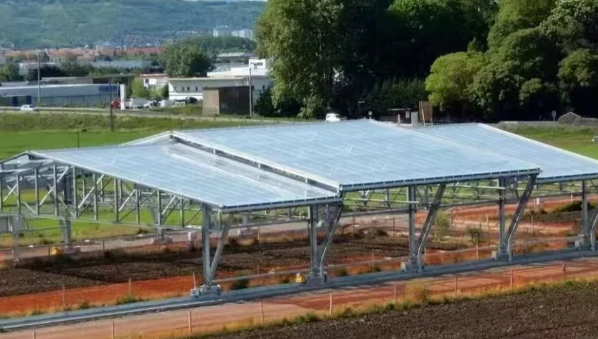
Let every crop have a “tailor-made” growth environment
The fixed roofs of traditional greenhouses often fall into a dilemma: when closed, they have good heat preservation but uneven light distribution; when open, they allow for natural ventilation but fail to control the temperature. The emergence of the movable ETFE roof has perfectly resolved this contradiction. The practice of a certain agricultural research institute in Germany shows that by dividing the roof into 12 independent ETFE membrane units, each unit can independently control the opening and closing Angle (adjustable from 0 to 90 degrees), 12 micro-environments ranging from dry to moist and from strong light to weak light can be formed in the same experimental field.
This precise regulatory ability is crucial for the screening of gene-edited crops. When researchers are cultivating drought-resistant wheat, they can simulate the climate characteristics along the Mediterranean coast by turning off the ETFE units on the west side to block the strong afternoon light and opening the units on the east side to introduce morning fog. The 95% light transmittance of ETFE film ensures the light intensity required for photosynthesis in crops. Meanwhile, the gradient shading dots printed on the surface can precisely adjust the ultraviolet light transmittance (from 10% to 90% continuously), meeting the special light quality requirements of different crops.
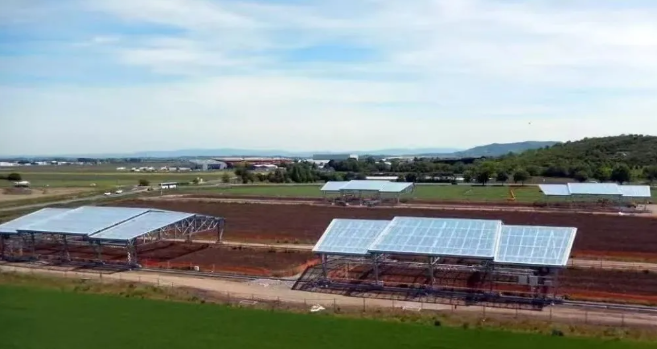
An intelligent test field that “moves” along with the seasons
In the Copenhagen Agricultural Science Park in Denmark, the movable ETFE roof has been given more flexible application scenarios – the entire roof system is installed on tracks and can move as a whole according to seasonal changes. During the spring crop sowing period, the roof is completely closed to form a confined space, taking advantage of the insulation property of ETFE film (with a U value as low as 1.8W/ m²?). K))), making the nighttime temperature 5-8℃ higher than the outside, accelerating seed germination; As summer enters its peak growing season, the roof automatically opens by two-thirds every morning to allow crops to receive natural rainfall and insect pollination, and closes in the evening to protect against dew and low temperatures.
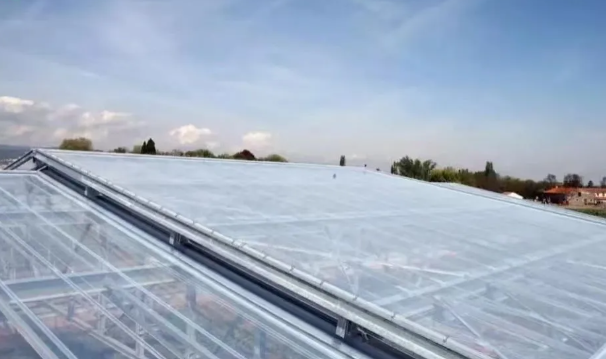
This “semi-natural” planting model provides valuable data for scientific research. Comparative experiments show that the expression level of disease and pest resistance genes in tomatoes grown under movable ETFE roofs is 37% higher than that of similar crops in fully enclosed greenhouses, while the yield only differs by 2%. Researchers explain: “Moderate exposure to natural environmental stress can trigger a stress response in crops, which is precisely a trait that is difficult to capture in laboratory data.”
A “Scientific Research Vault” for Dealing with extreme weather
Extreme weather caused by climate change is sharply increasing the risks of field experiments. However, at the ETFE roof test field of the University of Illinois, researchers managed to preserve the precious breeding materials through three linked measures: closing all roof units to maintain humidity, activating the subsurface spray system (taking advantage of the non-condensing property of the ETFE film to prevent water droplets on the leaf surface), and simultaneously introducing cooled air through the ventilation layers between the membrane materials.
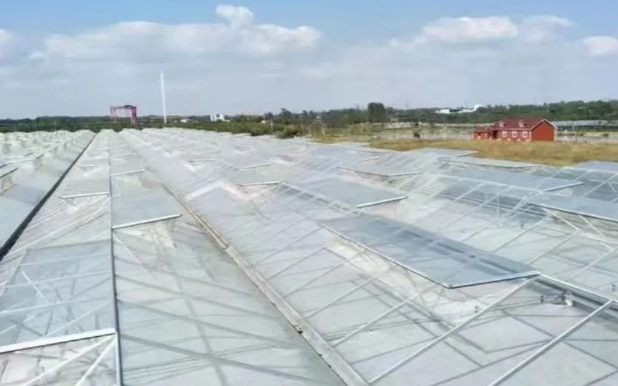
The core lies in the rapid response capability of the ETFE film – once a meteorological warning is issued, the roof can switch from fully open to fully closed within 10 minutes, which is five times faster than traditional glass greenhouses. The weather resistance of the membrane material itself has also withstood the test: in a frosty weather of -20 ℃, the ETFE membrane will not become brittle like glass. In the face of hail impact, its 500% elongation at break can effectively absorb the impact force and protect the test crops below.
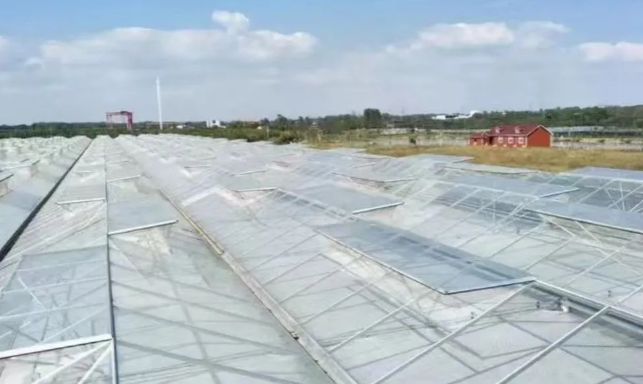
When the lightness of ETFE film meets the rigor of agricultural research, what is born is not only a new type of experimental facility, but also a revolution in the research paradigm. This mobile roof is like an “environmental regulation cube”, allowing researchers to freely adjust sunlight, rain, dew and air. While accelerating the process of crop breeding, it also provides a more precise solution for us to address the food security challenges brought about by climate change. Perhaps in the near future, every crop that changes the world will take its first step from the experimental field under the ETFE roof.
#tensile fabric roof structures #membrane building structure #tensile structure fabric material #Architectural Membrane

She has over 20 years of experience in tensile membrane structure design, engineering, and manufacturing, with extensive expertise in delivering custom solutions for commercial and architectural projects.