

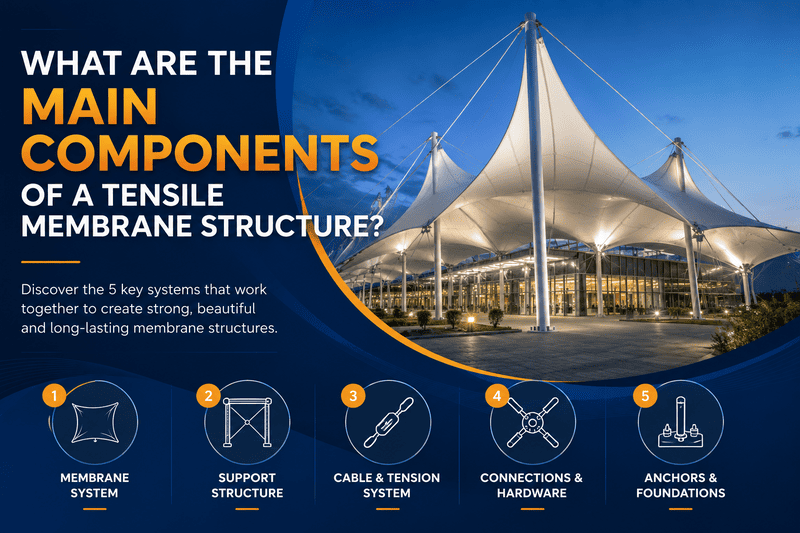
What Are the Main Components of a Tensile Membrane Structure?
If you are evaluating a tensile membrane roof, stadium canopy, entrance structure, or large-scale shade system, one of the first questions to answer is not simply whether a particular membrane material is “good.” A more useful question is, “What components make up a complete tensile membrane structure, and how do they work together to transfer loads safely into the supporting structure and foundations?” From an engineering and procurement perspective, a typical tensile membrane structure can be divided into five main systems: the membrane system, supporting structure, cable and tensioning system, connection nodes and hardware, and anchorage and foundations. Drainage, waterproofing, corrosion protection, and maintenance provisions are not always classified as primary structural components, but they still have a major influence on long-term performance. The 5 Main Components of a Tensile Membrane Structure Main Component Primary Function Typical Materials or Parts What Should You Check? 1. Membrane System Forms the architectural surface and carries in-plane tensile forces under prestress…