I. Composite Structure release Film Technology
There are two types of release film technologies for composite structures: ① Release film with PET as the base film; ② Release film with PI as the base film.
The PET base film composite release film uses a PET layer of 1 to 300μm as the base film, with a thermoplastic resin layer coated on top, followed by a curing layer of 0.1 to 5μm, and then a silicone resin layer. The thickness of the expensive resin layer is 0.01 to 5μm, the surface roughness is Ra29nm, and the peel force is 0.11N/50mm.

PET base film composite structure release film, source: industry conference
The thermoplastic resin layer of the PET base film composite structure release film can be unidirectional or bidirectional extended films such as ① polypropylene, ② polyethylene, ③ polyimide, ④ polyamide, ⑤ polycarbonate, ⑥ polyacetate, and ⑦ polyphenylene sulfide.
The PI-based film composite release film uses PI as the base film and has a release layer and a support layer. The support layer is DMF coated with fluororesin that can withstand 300℃.
Pi-based film composite structure release film, source: industry conference
Ii. Industrialization Technology of Polyimide Separator for Lithium-ion Batteries
Traditional polyethylene (PE) and polypropylene (PP) have low heat resistance. Overcharging and overdischarging, fast charging and fast discharging, or melting at high temperatures can cause short circuits, fires, and even explosions. The electrolyte permeation of the polyolefin membrane is insufficient.

The current solution is to coat inorganic ceramics on one or both sides of the polyolefin film. However, ceramic nanoparticles are prone to agglomeration and are difficult to evenly cover the surface of the base membrane, which can cause severe hole blockage, leading to an increase in ions on the surface of the separator and subsequently affecting the transfer resistance and the recycling performance of lithium batteries.

In addition, during the battery assembly process, the combination performance of inorganic ceramics and plates is poor, and the ceramic coating is prone to peeling off. If adhesives are added to enhance the adhesion, the permeability of the separator will deteriorate, and the internal resistance of the battery will increase.
Polyimide (PI) is one of the polymers with the highest comprehensive performance. PI can withstand temperatures above 400℃ and can be used for a long time at 200 to 300℃ without a distinct melting point. It has high insulation performance, with a dielectric constant of 4.0 at 1000Hz and a dielectric loss of only 0.004 to 0.007. It is thus called a “problem-solving expert”.
Secondly, PI porous membranes have good porosity, numerous polar groups, excellent ion conductivity, and good electrolyte permeability. They are suitable for high-speed charging and discharging of lithium-ion batteries, shortening charging time and extending the lifespan of lithium-ion batteries. Therefore, PI separators are expected to be the next-generation membrane material for lithium-ion batteries.

PI is used as a separator for lithium-ion batteries through two methods: preparing coated films by modifying the base film with PI and using PI as the base film. Therefore, PI porous membranes or PI-coated PE, PP, PP/PE/PP and other polyolefin membranes, as well as non-woven fabric separators such as ethylene phthalate (PET), polyethylene oxide (PEO), polyacrylonitrile (PAN), cellulose, etc., will become the hotspots of competition in the new lithium-ion battery separator market.
Ube Kosan Co., Ltd. has collaborated with Fukuoka University to cast a polyimide precursor solution into a film. Let it stand at room temperature in an atmospheric atmosphere for 1 to 60 minutes. Then, imide or chemically imide the cast film to obtain a polyimide porous film. The thickness of this porous membrane is 19 to 26μm.
Iii. A transparent conductive functional film of CNT that is easy to recycle
In January 2018, ア ア ア co., ltd. developed the single-walled carbon nanotube high-transparency conductive sheet “SCS?” The visible light transmittance of TC is 84.46%, which is comparable to that of A-PET (amorphous polyethylene terephthalate), and the deterioration over time is small.
Example of CNT conductive nanomembrane structure, source: Industry conference
When the CNT conductive nanomembrane is immersed in water, the water-soluble membrane dissolves, thus separating the CNT membrane from the PET membrane. CNT conductive nanomembranes can be used in conductive trays to protect electrical products and electronic components in automobiles from static electricity. (Patent obtained in February 2020 (Patent No. : 6656450)).
- Thermal conductive films for high thermal conductivity multi-layer substrates
On May 15, 2023, Panasonic developed the industry’s high thermal conductivity multi-layer substrate film “R-2400”, with a thermal conductivity of 2.7W/m. K has solved the thermal conductivity issues of xEV and industrial machines for the multi-layering direction of electronic circuit boards, making contributions to the miniaturization of machines.
This technology utilizes the high thermal conductivity design know-how of inorganic fillers to enhance the overall heat dissipation of electronic circuit boards, which helps to mitigate the heat generation of power semiconductors. It can be used in high-temperature environments up to 150℃ and may reduce the number of thermal countermeasure components such as heat sinks and cooling fans.
Five. The darkest thin sheet that absorbs over 99.98% of light
The National Institute of Advanced Industrial Science and Technology in Japan has successfully developed the world’s highest dark thin sheet that absorbs over 99.98% of light. Compared with the previous dark sheets, the reflectivity of visible light is one order of magnitude lower, and the light of the laser pointer disappears. Even in bright areas, its darkness is overwhelmingly black, providing an unprecedentedly high contrast in visual expression.
This technology extends the method of forming fine conical concave-convex (light-sealed structure) original discs through ion beam irradiation and chemical etching and transferring them to a wide range of materials. This method can be repeatedly transferred from disc molds or silicone molds and has significance for mass production.
Low-reflective black materials are widely used in decoration, imaging, solar energy utilization, light sensors, cameras and the interiors of spectrophotometric analysis devices, etc. The ideal material is a completely non-reflective composite material.
Six. Industrialization Technology of High-strength and high in-plane Thermal conductivity double-pull UHMWPE Film
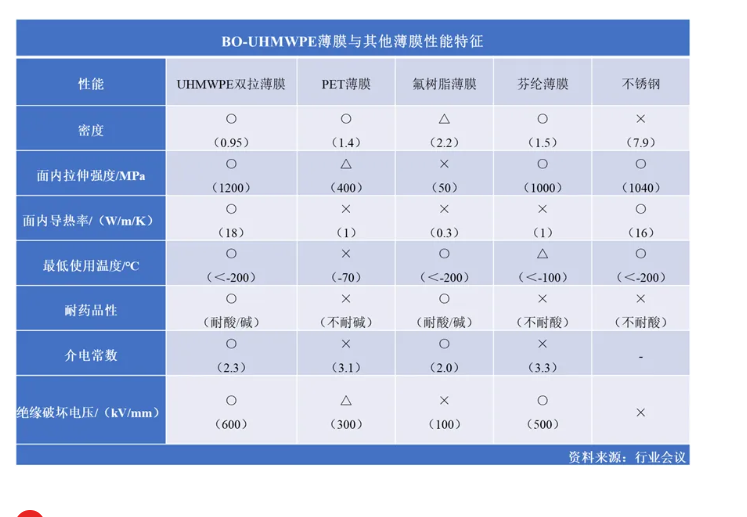
On January 24, 2024, Toray Industries, Ltd. successfully developed a high thermal conductivity ultra-high molecular weight polyethylene double-tensile film (BO-UHMWPE) with a tensile strength of 1200MPa, comparable to that of stainless steel. This film can be used for ultra-low temperature and heat dissipation purposes that combine high thermal conductivity, cold resistance and chemical resistance.
Vii. Industrialization Technology of PBI (Polybenzimidazole) Film
The National Aeronautics and Space Administration (NASA) of the United States and the Air Force Materials Research Institute (AFML) of the United States have successfully developed PBI resin, which is produced by PBI Performance Products, Inc. Production.
#Yexing membrane structure
#Yexing Membrane solutions for your building needs
#fabric structure engineering case
#fabric structure engineering
#membrane structure engineering
#high-tech architectural membrane

She has over 20 years of experience in tensile membrane structure design, engineering, and manufacturing, with extensive expertise in delivering custom solutions for commercial and architectural projects.