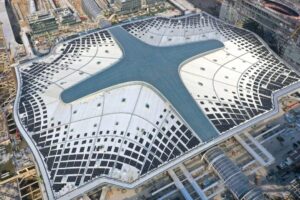
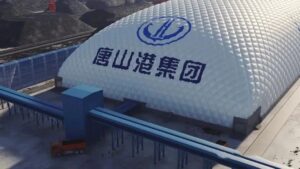
In the design of membrane structures, accurately calculating the area of the membrane structure is of great significance. By dividing the membrane structure into multiple small areas and performing numerical integration on each small area, and finally adding up the integration results of all small areas, the area of the entire membrane structure can be obtained. For instance, for the spherical mask structure, the formula for calculating the spherical area can be used for the calculation.
For cylindrical membrane structures, the formula for calculating the cylindrical area can be used for the calculation. Although these regular area calculation methods are simple, they have certain practicality in actual engineering. In conclusion, there are many methods for calculating the area of membrane structures. The selection of an appropriate method depends on the shape, complexity and calculation accuracy requirements of the membrane structure.
Calculation of membrane material area
The core part of a membrane structure is the membrane material, and its area calculation serves as the basis for the calculation of engineering quantities. The membrane surface of a membrane structure is usually a complex curved surface and cannot be simply calculated using the area formula of conventional geometric figures. Generally speaking, professional membrane structure design software will accurately determine the unfolded area of the membrane surface through shape analysis. This unfolded area includes the deformation of the membrane material during the tensioning process and the additional area required for splicing. For instance, for a common tensioned membrane carport, we need to first measure its projected area, that is, the size of the carport’s projection on a horizontal surface. However, this is only preliminary data. Due to the certain curvature and tension of the membrane surface, the actual unfolded area is larger than the projected area. Based on experience, for some simple membrane structure shapes, the expansion amplification factor is generally between 1.1 and 1.3. Suppose the projected area of a carport is 100 square meters. If the expansion magnification factor is taken as 1.2, then the expanded area of its membrane material is approximately 120 square meters.
Support structure engineering quantity
The supporting structure is the guarantee of the stability of membrane structures, and its engineering quantity calculation should not be ignored either. The supporting structure is usually composed of materials such as steel and aluminum alloy. For steel structure supports, the lengths and weights of various types of steel sections need to be calculated. For instance, for a circular pipe with a diameter of 100 millimeters and a length of 5 meters, we can calculate its weight through the density of steel and the volume formula of the circular pipe. Steel of different specifications has different theoretical weights. When calculating, accurate selection should be made. At the same time, the quantity of connecting parts, such as bolts and welded parts, should also be taken into consideration. Although each of these connecting parts is not very heavy, there are a large number of them. When accumulated, they also amount to a considerable amount of work. If 100 sets of bolts are used for connection in a membrane structure project, and each set of bolts includes screws, nuts, washers, etc., detailed statistics should be made.
Quantities of work related to installation and construction techniques
The installation process of membrane structures involves many techniques, all of which are reflected in the volume of work. When installing membrane materials, a professional construction team is required to carry out tensioning operations, and the labor hours involved in this process are an important amount of work. The labor hours will vary depending on the complexity of the project and the size of the membrane material area. Generally speaking, for every 100 square meters of membrane material installed, it takes about 10 to 15 working days under conventional construction conditions. In addition, the rental costs and usage periods of the mechanical equipment used during the construction process, such as cranes and elevators, should also be included in the calculation of the quantities of work. For instance, renting a crane for membrane structure installation, with a daily rental fee of 2,000 yuan and using it for three days, amounts to a mechanical cost of 6,000 yuan for the engineering volume.
Other auxiliary materials and measures project quantities
In addition to membrane materials and supporting structural materials, some auxiliary materials also need to be calculated. Like sealant, it is used for sealing the seams of membrane materials and the connection points between membrane materials and supporting structures to prevent water leakage. The amount of sealant used can be calculated based on the length of the sealing joint and the thickness and width of the sealant application. In addition, during the construction process, to ensure construction safety and smooth progress, some measures will be taken, such as setting up scaffolding. The construction area, number of floors and usage time of scaffolding all constitute the engineering volume of the measure project.
Yexing Membrane Structure # Membrane Structure Factory # Tensile Structure Manufacturer

She has over 20 years of experience in tensile membrane structure design, engineering, and manufacturing, with extensive expertise in delivering custom solutions for commercial and architectural projects.