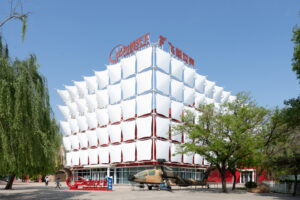
Inflatable membrane structures are an important branch of lightweight spatial structures. In addition to their rich and colorful shapes, they also have excellent architectural and structural characteristics, as well as suitable economic benefits. Therefore, the birth of membrane structures has rapidly developed around the world. Membrane structures are mainly divided into tension membrane structures, skeleton membrane structures, inflatable membrane structures, cable truss membrane structures, tension whole structures, and cable dome membrane structures.
Inflatable membrane structure is a relatively enclosed space structure. Unlike traditional space structures, it uses fans to blow air into the interior of the structure, maintaining a certain pressure difference between the inside and outside of the membrane structure to ensure the stiffness of the membrane structure system and maintain the designed shape.
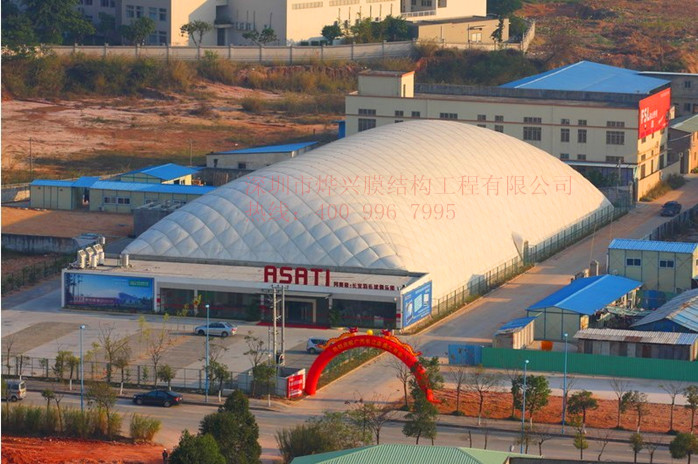
At the same time, the pressure control system can maintain a certain internal and external pressure on the structure, ensuring structural stability.
In 1917, W Lanchester invented an inflatable membrane structure as the roof of the right outer hospital building, which is a convenient and cost-effective roof system for installation, but he himself did not build it.
In 1946, the British man Walter Bird built the first modern inflatable membrane structure, the Doppler Radome, with a diameter of 15m and a height of 18.3m, using a membrane material made of chloroprene rubber as a layer on a glass fiber substrate. Between 1950 and 1970, a large number of similar domes were built for cameras in the United States, Germany, and other places, with a maximum diameter of 60m.
The 1970 Osaka World Expo in Japan (EXPO’70) provided an opportunity for the development of membrane structures. Due to the frequent earthquakes in Japan and the fact that most of the exhibition halls are located on low-grade soft soil, it is advisable to adopt a lightweight structural system for the exhibition halls. The US Pavilion, designed by David Geiger, has built its first large-span, low profile inflatable membrane structure with a flat surface of 139m × A 78m ellipse.
From 1972 to 1984, designed by David Geiger, Birair Company built the Silver Dome (220m) in the United States × 159m) and other seven giant inflatable membrane structures, but most membrane structures have been proven to be difficult to effectively resist harsh weather conditions with large spans.
In 1988, Japan built the Tokyo Dome. Although the technology of inflatable membrane structures has reached a new level, no giant inflatable membrane structures have been built around the world since then.
Before the emergence of the cable dome system, the inflatable membrane structure created a glorious development history of large-span buildings.
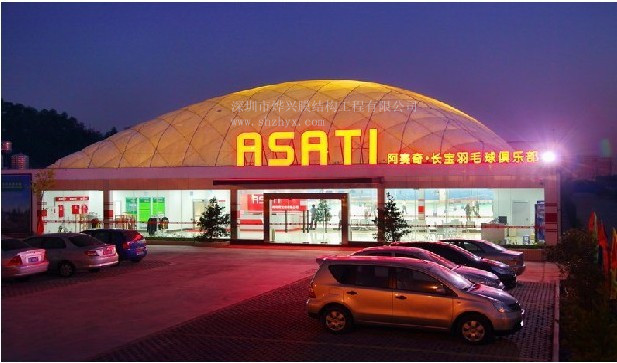
Inflatable membrane structure is a new type of spatial architecture that has advantages that traditional architecture cannot match. Especially for workplaces that require large areas and spaces, it has more advantages than any building, so it can be widely used in areas that require large span work spaces.
Therefore, it can be applied to large-scale workshops, warehouses, sports venues, exhibition halls, etc.
If you want to know more about membrane structure, please add our official WhatsApp: +86-13923448766, or send an email to our official email: yexing@yexinggroup.com. We will provide you with free consulting services 24 hours a day.

She has over 20 years of experience in tensile membrane structure design, engineering, and manufacturing, with extensive expertise in delivering custom solutions for commercial and architectural projects.