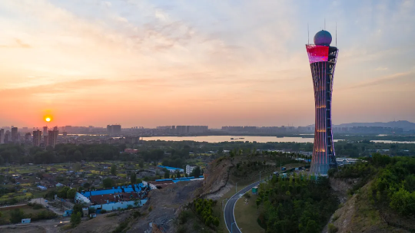
Located on a mountaintop in the Wolong Scenic Area of Huaibei, Anhui Province, China, the Huaibei Weather Radar Tower is a 128-meter-high meteorological radar tower. To reduce the effects of prolonged direct solar exposure on the tower and help create a more stable environment for the precision instruments inside, the project adopted a steel-supported PTFE mesh membrane cladding system around the tower body.
Shenzhen Yexing Intelligent Space Technology Co., Ltd. was responsible for both the design and construction of the project. Following on-site surveys and multiple rounds of design coordination, a silver PTFE mesh membrane was selected to address four key objectives: equipment environment stability, functional exterior protection, architectural appearance, and integration with the tower’s nighttime lighting.
A total of 3,286 m² of PTFE mesh membrane was installed, transforming the technical radar facility into a distinctive architectural landmark while maintaining the functional requirements of a meteorological tower. The project was completed in May 2022.
Project Overview
| Project Name | Huaibei Weather Radar Tower Membrane Structure Project |
|---|---|
| Location | Wolong Scenic Area, Huaibei, Anhui Province, China |
| Completion | May 2022 |
| Tower Height | 128 m |
| Design & Construction | Shenzhen Yexing Intelligent Space Technology Co., Ltd. |
| Membrane Supplier | Huaside Mesh Membrane |
| Primary Membrane Material | Silver PTFE mesh membrane |
| Membrane Area | 3,286 m² |
| Structure Type | Steel-supported PTFE mesh membrane cladding / secondary tower envelope |
| Primary Functions | Reduce direct solar exposure, help moderate internal temperature fluctuations, and enhance the tower’s architectural appearance. |
Why Does a Weather Radar Tower Need a Membrane Envelope?
A weather radar tower is very different from a conventional observation or landscape tower. Precision meteorological instruments and other technical equipment are installed inside the structure, making the internal operating environment an important consideration.
For a tall tower continuously exposed to mountaintop conditions, solar radiation can heat different sides of the structure at different times of the day. The purpose of this project was therefore not simply to give the tower a new appearance. The exterior membrane system was designed to reduce prolonged direct sunlight on the main tower body and help moderate temperature fluctuations inside, supporting a more stable working environment for the precision equipment.
The tower is also located within a scenic area and is clearly visible from a considerable distance. As a result, the exterior envelope needed to satisfy functional requirements while also responding to the surrounding landscape, changing daylight conditions, and nighttime architectural lighting.
Project Challenges: A 128 m Tower in a Scenic Mountaintop Environment
Compared with conventional membrane structures used for canopies, stadiums, commercial spaces, or parking areas, the Huaibei Weather Radar Tower presented a very different set of engineering and architectural challenges.
The 128-meter tower height required greater attention to design detailing, membrane segmentation, structural coordination, and high-altitude installation. At the same time, its prominent mountaintop location meant that the building would be viewed from different directions and under constantly changing weather and lighting conditions.
- Functional requirements: Reduce the long-term effects of direct sunlight on the tower body and support a more stable environment for the precision equipment inside.
- Material requirements: Create a clearly defined exterior architectural surface without producing an excessively strong mirror-like reflection.
- Landscape requirements: Maintain a coordinated appearance in bright sunlight, sunset conditions, cloudy weather, and nighttime illumination.
- Construction requirements: Maintain close coordination between architectural design, structural detailing, membrane panelization, and on-site installation.
Design Solution: Silver PTFE Mesh Membrane Around the Tower
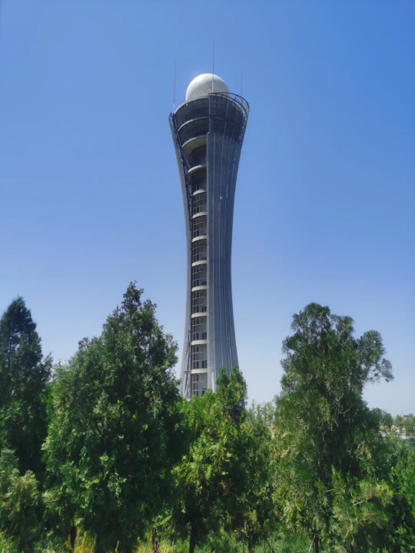
Following an on-site survey and several rounds of discussion with the project stakeholders, the final solution used a silver PTFE mesh membrane wrapped around the tower as a secondary exterior envelope.
PTFE mesh membrane combines the lightweight visual qualities associated with tensile membrane architecture with the openness of a mesh material. Rather than completely enclosing the tower with a solid façade, the membrane creates a continuous architectural skin while retaining a visually light and open appearance.
1. A Second Architectural Skin for the Tower
In this project, the steel-supported membrane system functions as a second skin outside the original weather radar tower.
This additional layer provides partial protection from direct sunlight, helping reduce continuous solar exposure on the tower body. At the same time, the mesh membrane avoids the visual weight of a conventional solid wall, allowing the 128-meter structure to maintain a lighter and more refined appearance.
2. Silver PTFE Mesh Balances Shading, Reflection, and Architectural Appearance
Instead of using a highly saturated color or a strongly reflective façade material, the project selected a silver PTFE mesh membrane.
Under different viewing angles and daylight conditions, the silver surface produces controlled variations in brightness and reflection. This reinforces the tower’s technological character without turning the building into an excessively reflective object.
For a tall technical structure located within a scenic area, this restrained material treatment helps balance the tower’s functional identity with its role in the surrounding public landscape.
3. 3,286 m² of Membrane Creates a Unified Vertical Form
The project uses a total of 3,286 m² of silver PTFE mesh membrane. Extending vertically along the tower body, the membrane creates a continuous and unified architectural expression.
From a distance, the radar tower is no longer perceived solely as a piece of technical infrastructure. The new exterior envelope gives it a stronger visual identity and allows the structure to become a recognizable element of the scenic area’s skyline.
From Site Survey to Integrated Design and Construction
The final quality of a membrane structure depends not only on the original design concept but also on whether that concept can be successfully translated into an engineered and buildable solution.
For the Huaibei Weather Radar Tower project, the design was not based on a standard membrane form. The project team first studied the existing tower, mountaintop conditions, visitor sightlines, and changes in natural light. Several rounds of coordination then helped determine the appropriate material and overall visual direction.
Shenzhen Yexing Intelligent Space Technology Co., Ltd. handled both design and construction, allowing the architectural concept, steel support system, membrane detailing, and site installation to be developed toward the same project objectives.
For a high-rise tower cladding project of this type, continuity between design and construction is particularly important. It helps reduce the gap between an attractive design proposal and practical site execution while keeping material selection, structural logic, and the final appearance aligned.
The value of the project therefore goes beyond the installation of 3,286 m² of PTFE mesh membrane. It demonstrates how a technical meteorological facility can be transformed through membrane structure design into a high-rise landmark that combines functional performance, a contemporary technological character, and landscape value.
A Weather Radar Tower That Changes with Light and Weather
One of the most distinctive visual characteristics of the silver PTFE mesh membrane is the way its appearance changes with natural light, sky color, weather conditions, and viewing angle.
Rather than relying on fixed decorative patterns, the façade responds naturally to its surroundings throughout the day.
- In strong morning sunlight: the silver tower appears bright and clean, reinforcing a modern and technological architectural image.
- During sunset: the membrane surface reflects the changing tones of the surrounding sky, giving the tower a softer and more varied appearance.
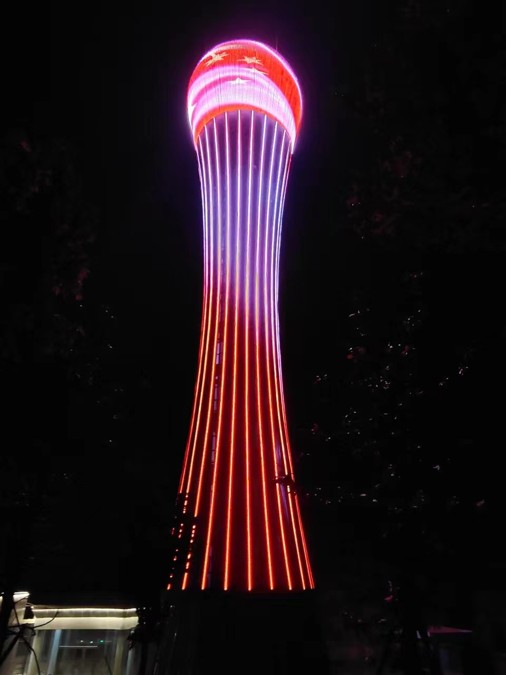
- At night: the architectural lighting system can introduce different colors across the silver membrane surface, increasing the tower’s visibility and visual identity within the nighttime landscape.
The design intention was not to create a tower that looks the same at every hour of the day. Instead, the membrane surface interacts with daylight, weather, and architectural lighting, allowing the tower to present different colors and textures under different conditions.
By combining a functional exterior membrane with a dedicated lighting system, the weather radar tower also gains the potential to serve as a recognizable local landmark.
Project Value: Combining Functional Membrane Cladding with Landmark Architecture
The Huaibei Weather Radar Tower PTFE mesh membrane structure demonstrates another application for tensile membrane technology beyond conventional stadium roofs, canopies, parking structures, and commercial spaces.
For weather towers, radar towers, equipment towers, observation towers, and other specialized structures, a properly designed membrane envelope can provide a lightweight secondary cladding solution while also upgrading the overall architectural appearance.
For the building owner, the primary objective of the Huaibei project was functional: reducing direct solar exposure on the tower body and helping moderate changes in the internal environment.
For the surrounding scenic area, however, the silver membrane surface and nighttime lighting also add architectural and landscape value to what would otherwise be a highly technical piece of infrastructure.
This combination of function-first design and added landscape value is one of the key characteristics that distinguishes the project from a purely decorative membrane structure.
Yexing’s Experience in Specialized Membrane Structure Projects
As the design and construction contractor for the Huaibei Weather Radar Tower project, Shenzhen Yexing Intelligent Space Technology Co., Ltd. needed to address several requirements simultaneously: the operational needs of a meteorological tower, the visual characteristics of a high-rise structure, and the architectural properties of PTFE mesh membrane.
From the initial site survey and design coordination to membrane selection and final construction, the project demonstrates an integrated approach to specialized membrane structures, combining design development, construction coordination, and architectural expression.
For projects involving weather towers, radar towers, observation towers, equipment towers, or other specialized structures, the Huaibei project provides a practical reference for integrating functional requirements, membrane structure technology, and architectural design into a coordinated solution.
Project Summary
The Huaibei Weather Radar Tower membrane structure project is located on a mountaintop in the Wolong Scenic Area of Huaibei, Anhui Province, China.
The project added a steel-supported exterior membrane system to a 128-meter weather radar tower, using 3,286 m² of silver PTFE mesh membrane. Shenzhen Yexing Intelligent Space Technology Co., Ltd. was responsible for both design and construction, and the project was completed in May 2022.
The membrane envelope was designed primarily to reduce prolonged direct solar exposure on the tower body and help moderate temperature fluctuations inside. At the same time, the silver PTFE mesh surface works with the nighttime lighting system to create different visual effects under changing weather, daylight, and nighttime conditions.
The result is not only a PTFE mesh membrane structure project but also an example of how a specialized technical tower can combine functional exterior protection with architectural and landscape design.
FAQ
The project uses a steel-supported silver PTFE mesh membrane cladding system around the 128-meter weather radar tower. A total of 3,286 m² of PTFE mesh membrane was installed to create a lightweight secondary architectural envelope.
PTFE mesh membrane can provide partial shading while retaining a relatively open and lightweight exterior appearance. This makes it an option for tower projects that need to balance solar protection, exterior cladding, and architectural appearance.
In this project, the membrane layer reduces prolonged direct solar exposure on the main tower body. This helps moderate temperature fluctuations inside the tower and supports a more stable environment for precision meteorological instruments.
Silver PTFE mesh membrane provides a combination of shading, visual openness, and a contemporary technological appearance. Its surface changes subtly under different lighting conditions without creating the excessively strong mirror-like reflection associated with some highly reflective façade materials.
A high-rise membrane structure requires consideration of the existing tower structure, wind conditions, membrane material properties, steel connections, membrane panelization, and high-altitude installation conditions. The system should be specifically designed and detailed for the requirements of each project.
PTFE mesh membrane can be considered as an exterior envelope solution for weather towers, radar towers, equipment towers, observation towers, and other specialized structures. The final design should take into account the tower structure, wind loads, functional requirements, material characteristics, and construction conditions.
The project used a total of 3,286 m² of silver PTFE mesh membrane. The membrane extends vertically along the 128-meter tower, creating a continuous exterior envelope and a unified architectural appearance.
Shenzhen Yexing Intelligent Space Technology Co., Ltd. was responsible for both the design and construction of the project, covering the process from site investigation and design development through steel-and-membrane detailing and on-site implementation. The project was completed in May 2022.