The development history of membrane structures is essentially an evolutionary history of material technology. Every breakthrough in materials has driven membrane structures to leap from “temporary facilities” to “permanent high-performance buildings”. The early membrane structure materials can be traced back to the canvas fabrics of the 1950s. These materials were based on cotton or polyester fibers and only received simple waterproof coating treatment. They had extremely poor weather resistance – after being exposed to the sun and rain for 1-2 years in outdoor environments, the coating would crack and fall off, and the fiber strength would drop by more than 50% It can only be used for temporary tents and small sunshades and cannot meet the long-term usage requirements.
It was not until the 1970s, with the development of polymer materials technology, that membrane structure materials entered the “composite system era”. The combination of high-strength fibers and functional coatings endowed membrane materials with core characteristics such as durability, weather resistance and high strength, and also laid the foundation for the large-scale application of membrane structures.
At present, the mainstream membrane materials in the market are mainly divided into three categories. The composition, performance and applicable scenarios of each category of materials are clearly distinguished, which have become the core basis for engineering selection. The first type is PTFE (polytetrafluoroethylene) membrane material, which uses glass fiber as the base fabric and is coated with polytetrafluoroethylene resin on the surface. It has extremely strong weather resistance and durability – it can maintain stable performance within the temperature range of -70 ℃ to 260℃, is resistant to ultraviolet radiation and acid and alkali corrosion, and has a service life of 25 to 30 years. It is the preferred material for permanent buildings such as stadiums and airport terminals. The membrane structure roof of the main terminal building of Beijing Daxing International Airport covers a total area of 120,000 square meters and is entirely made of PTFE membrane materials, which can withstand the severe cold in Beijing’s winter and the heavy rain in summer.
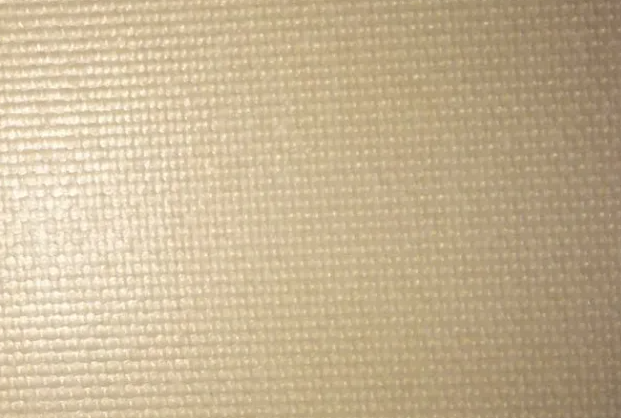
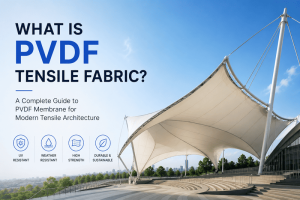
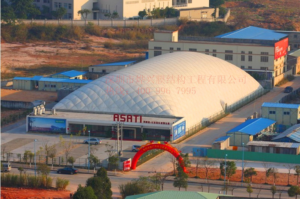
The second category is PVDF (polyvinylidene fluoride) membrane material, which uses polyester fiber (polyester) as the base fabric and is coated with polyvinylidene fluoride. It combines economy and durability, with a tensile strength of 400N/5cm and a service life of 15 to 20 years. It is widely used in commercial facilities and industrial plants. A light industrial plant in a certain industrial park adopts PVDF membrane material for its roof. The cost per square meter is only 60% of that of PTFE membrane material, yet it can meet the maintenance-free demand for 10 years.
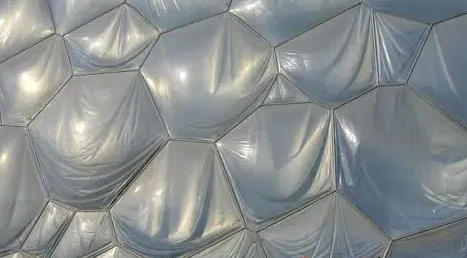
The third type is ETFE (ethylene-tetrafluoroethylene copolymer) film material, which is made from ethylene-tetrafluoroethylene copolymer and does not require a base fabric. It is a single-layer film material with light transmittance comparable to that of glass (with a light transmittance of over 90%), and its weight is only 1/20 of that of glass. It is commonly found in the greenhouses of botanical gardens and the skins of landmark buildings. The tropical plant greenhouse in Shanghai Chenshan Botanical Garden features a dome built with ETFE membrane material, which not only ensures the natural light needed for plant growth but also reduces the load on the steel structure through lightweight design.
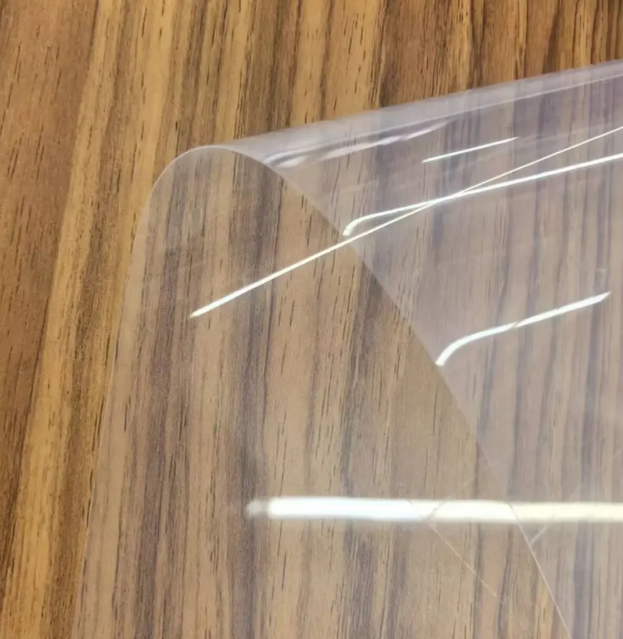
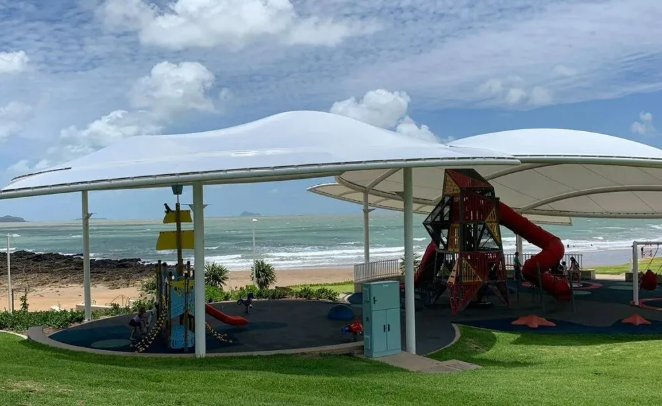
Since the beginning of the 21st century, innovations in material technology have been driving membrane structures to upgrade towards “intelligence and low carbonization”. New functional membrane materials are constantly emerging, expanding the application boundaries of membrane structures. In the field of self-cleaning, researchers have developed nano-self-cleaning membrane materials. By coating the surface of the membrane material with a nano-coating of titanium dioxide and using photocatalytic reactions to decompose dust and organic matter, it can achieve “self-cleaning” after being washed by rainwater. After the membrane structure coastal walkway in a certain coastal city adopted this technology, the annual cleaning frequency was reduced from 12 times to 3 times. Maintenance costs have been reduced by 75%.
Driven by the demand for sustainable development, key breakthroughs have also been made in the research and development of recyclable membrane materials. Due to the complex combination of base fabric and coating in traditional membrane materials, it is difficult to separate them during recycling, resulting in a recycling rate of less than 30%. The new type of recyclable membrane material achieves reversible bonding between the base fabric and the coating by improving the coating process and using water-soluble binders. During recycling, it only needs to be immersed in a specific solution to separate. The recovery rate of polyester base fabric is 90%, and that of PTFE coating is 80%. The scientific nature of material selection directly determines the success or failure and benefits of membrane structure projects
#tensile fabric roof structures #tensile structure fabric material #Architectural Membrane

She has over 20 years of experience in tensile membrane structure design, engineering, and manufacturing, with extensive expertise in delivering custom solutions for commercial and architectural projects.