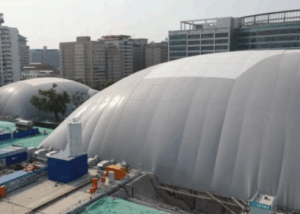
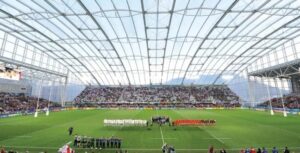
Stadiums use tensile membrane roofs because these systems can cover wide seating areas with fewer view-blocking supports while providing shade, rain protection, natural daylight, and distinctive roof designs. Their lightweight roof coverings can also create more flexibility for large stadium projects.
A stadium roof must do more than look good. It needs to suit the seating layout, local climate, budget, and long-term maintenance plan. Here are seven practical benefits of tensile membrane stadium roofs—and what owners should consider before choosing one.
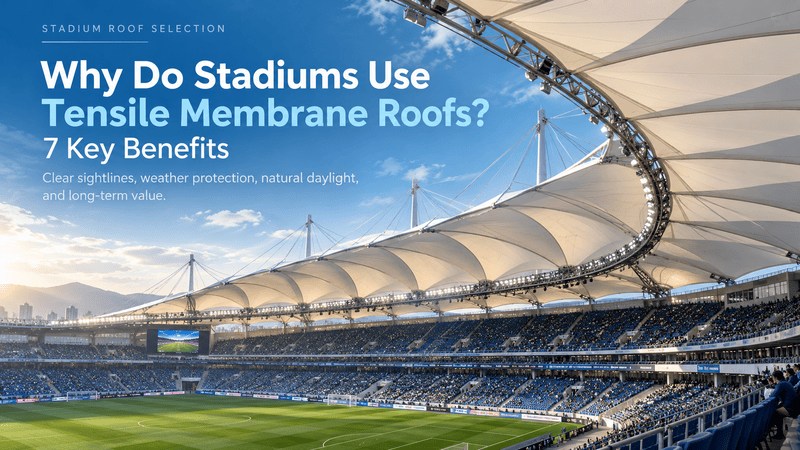
1. Large-Span Coverage With Clearer Stadium Sightlines
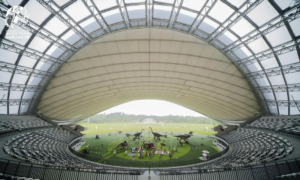
Large stadiums need roofs that cover wide seating areas without placing columns in the way of the action. Tensile membrane roof systems can help achieve this by spanning large areas with a combination of prestressed membrane material, cables, and steel supports.
With a well-designed support arrangement, structural elements can be positioned away from key viewing areas. Spectators enjoy a clearer view of the pitch, while architects gain more flexibility in planning seating and circulation spaces.
The important point is that the span is achieved by the complete engineered roof system—not by a sheet of fabric working on its own.
2. Sun and Rain Protection for More Comfortable Spectators
Strong sunshine or a sudden downpour can make a sporting event less enjoyable. A tensile membrane stadium roof provides overhead shade and rain protection, helping spectators stay more comfortable in changing weather.
The membrane material is only one part of that protection. Roof coverage, slope, gutters, and drainage outlets all matter. In the Philippines and Malaysia, designers may prioritize heavy rainfall and wind-driven rain. In Saudi Arabia and the UAE, shading and solar heat control are often especially important.
A waterproof membrane does not mean every seat will always stay dry. Wind can push rain beneath the roof edge, so effective spectator protection depends on the overall roof design.
3. Lightweight Roof Coverings That Reduce Structural Loads
Because stadium roofs cover such large areas, the weight of the roofing material can make a real difference to structural design. ETFE film and PTFE-coated fiberglass fabric are lighter than many conventional rigid roof coverings.
A lighter roof covering reduces its own dead load and may give engineers more flexibility when designing the supporting steelwork and cable system. This can be especially valuable on a long-span stadium roof, where loads must be transferred safely over large distances.
However, the membrane is not the entire roof. Steel members, cables, connections, and other components still carry significant loads. Any cost or weight comparison should consider the complete roof system, not just the membrane material.
4. Natural Daylight With ETFE and PTFE Stadium Roofs
A stadium roof needs to provide shelter, but it does not always need to block out daylight. Transparent ETFE film can allow natural light into the stadium, while some translucent PTFE-coated fabrics create softer, diffused light.
This can make covered seating areas and circulation spaces feel brighter and, in suitable conditions, reduce the need for artificial lighting during the day. For football stadiums with natural grass, the distribution of sunlight across the pitch is also an important design consideration.
More light is not always better. The right solution balances daylight, glare, shading, and heat gain according to the stadium’s orientation, climate, and membrane specifications.
5. Flexible Roof Shapes That Create Distinctive Stadium Architecture
A modern stadium is often more than a sports venue—it can also become a recognizable city landmark. Tensile membrane structures allow architects to create flowing curves, sweeping rooflines, and lightweight-looking forms that give stadiums a distinctive identity.
Qingdao Youth Football Stadium in China is a real-world example. According to Yexing’s published project information, its single-layer ETFE membrane work covers approximately 23,687 m² and uses 250 μm transparent and frosted ETFE film. Yexing was responsible for the detailed design of the membrane package, material supply, and installation.
The project shows how an ETFE membrane roof can contribute to a stadium’s architectural character while meeting practical roofing needs. The appearance still has to be supported by sound structural engineering, drainage, and wind-load design.
6. Factory Prefabrication for More Efficient Stadium Roof Installation
Large stadium roofs demand accurate fabrication and careful installation planning. One advantage of tensile membrane construction is that much of the membrane work can be completed in a factory before installation begins on site.
Using the engineered roof geometry, manufacturers can prepare cutting patterns, cut and weld membrane panels, and carry out quality checks in a controlled environment. The prefabricated panels are then transported to the stadium for installation and tensioning.
This approach can improve fabrication accuracy and reduce some on-site work. It does not guarantee a shorter construction schedule on every project, because steelwork, lifting access, weather, and installation coordination still affect progress.
7. Weather Resistance and Long-Term Value for Stadium Owners
For stadium owners, the true value of a roof is measured over many years—not just at the time of construction. Materials such as PTFE-coated fiberglass and ETFE film are widely selected for their weather resistance and suitability for permanent architectural applications.
A properly designed and installed tensile membrane roof can provide lasting performance, but different products have different expected service lives. Regular cleaning, inspection of edges and connections, and maintenance of drainage systems are still necessary.
When comparing roof options, owners should consider the full life-cycle cost: initial construction, inspection, maintenance, potential repairs, and eventual membrane replacement. The lowest upfront quotation is not always the best long-term choice.
Is a Tensile Membrane Roof Right for Your Stadium?
The right stadium roof is the one that meets your project’s specific needs. Start by defining which seating areas require protection, the views that must remain clear, the local wind and rainfall conditions, and whether the stadium needs natural daylight through the roof.
Next, compare suitable membrane materials and structural systems against your budget, construction timetable, and long-term maintenance plan. A well-chosen tensile membrane roof should balance spectator comfort, safety, architectural design, and the overall cost of ownership—not simply deliver an attractive appearance.
Planning a new stadium or roof upgrade? Explore Yexing’s tensile membrane roof solutions and review the Qingdao stadium ETFE project as a practical reference.
FAQ
Tensile membrane roofs offer lightweight coverings, flexible shapes, and the option of natural daylight through selected materials. Metal roofing can also be durable and suitable for long spans, so neither system is automatically better. The right choice depends on the stadium’s design, climate, budget, and performance requirements.
Yes, when the complete roof is engineered for the site and meets applicable local standards. Wind resistance depends on the membrane, support structure, cables, and connections working together. In storm-prone locations, drainage capacity and protection against wind-driven rain also require careful design.
It depends on the project’s priorities. ETFE film is lightweight and can provide high transparency, making it useful where daylight is important. PTFE-coated fiberglass is a durable architectural fabric that can offer diffused light and effective solar shading, depending on the product. Fire performance, cost, climate, and maintenance should also guide the decision. Read our ETFE, PTFE, and PVDF material comparison for a more detailed overview.
Not necessarily. The indoor or covered-area temperature depends on the membrane’s solar properties, transparency, roof geometry, and ventilation. A clear ETFE roof can admit useful daylight but may need additional solar-control measures in hot climates. Material selection should balance light and thermal comfort.
Not always. A lightweight membrane covering may reduce some structural demands, but total costs also include steelwork, cables, engineering, access, and installation. To compare options fairly, ask for a complete roof-system quotation and consider future maintenance and replacement expenses.
Some high-performance PTFE and ETFE roof systems are designed for around 25–30 years or longer, but there is no single guaranteed lifespan. Actual service life depends on the exact product, climate exposure, detailing, installation quality, and maintenance. Always check the manufacturer’s technical data and warranty terms for the specified system.

She has over 20 years of experience in tensile membrane structure design, engineering, and manufacturing, with extensive expertise in delivering custom solutions for commercial and architectural projects.